What You Need To Know
Toddlers explore objects with their mouths, so a sippy cup’s materials and lid design matter. This guide focuses on chew-resistance, safe food-grade materials, venting systems that equalize pressure without backflow, and lid durability checks you can do at home. Use the short checklists and product notes below to pick a cup that stands up to biting and keeps drinking safe.
Kids Cups with Straws and Lids Leak Proof, 2 Pack 10oz
Kids Cups with Straws and Lids Leak Proof, 2 Pack 10oz stood out for families who prefer straw cups to avoid soft spout wear and want a leak-minimizing option. and balanced scoring across the most useful buying criteria.
View Deal On Amazon
Safety guide to choosing BPA-free sippy cups for toddlers with chew-proof lids
Soft silicone spouts are gentle on gums and tend to tear rather than shatter, which is safer than brittle plastic, but they need regular inspection and replacement. Stainless-steel bodies add impact resistance and longevity; paired with silicone spouts, they balance durability with chew-safety. Straw-style cups can reduce surface wear on spouts but introduce a chewable element—choose short, reinforced or stainless straws. Venting varies: cups that actively equalize pressure reduce spills and sucking effort, but vents must be simple to clean and robust against clogging.
Kids Cups with Straws and Lids Leak Proof, 2 Pack 10oz
Not specified
Compact 10oz straw cup set marketed as leak-proof; straw-style design reduces direct spout chewing but adds a chewable element to monitor.
Sperric Silicone Baby Cup - Toddler Training Cup
Sperric
All-silicone training cup that prioritizes soft, flexible material—gentle on gums and generally safer than hard plastic for chewers, but requires routine inspection for tears.

Elk and Friends 10oz Stainless Steel Kids + Toddler Cup
Elk and Friends
Stainless-steel body with a silicone lid/spout—offers strong impact resistance from the metal body while keeping a softer drinking surface; durable choice for active toddlers.
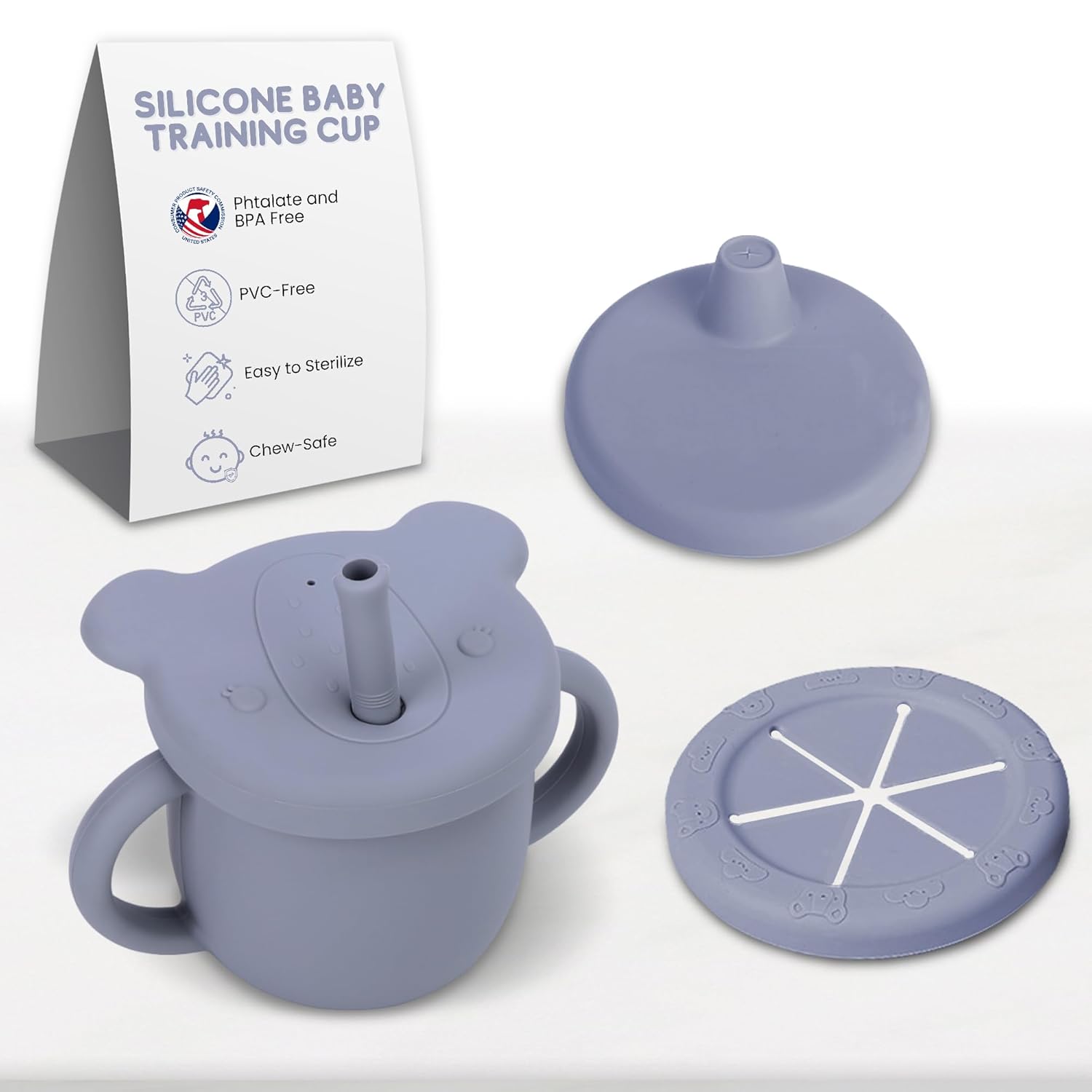
ELBEBE Silicone Baby Training Cup
ELBEBE
Silicone training cup similar to other all-silicone options—soft and lightweight, with an emphasis on a gentle drinking surface for toddlers.
Buying Notes
Key safety checklist for bite-prone toddlers: - Prefer food-grade silicone or stainless-steel bodies; avoid thin, brittle plastics. - Choose soft, one-piece silicone spouts or short reinforced silicone straws—no thin removable valves that tear. - Look for pressure-equalizing vents (air channels or valve systems) that prevent gulping or backflow; test vents for blockage. - Inspect lids for single-piece molding or reinforced seams and replace if you find splits, thinning or fraying. - Verify BPA-free labeling and prefer products with clear cleaning instructions; dishwasher-safe parts reduce bacteria risk. - Replace any cup at the first sign of chew damage—do not try to repair torn silicone with household adhesives. - When possible, choose cups with replaceable lids or parts so you can swap a worn spout without discarding the whole cup.
Kids Cups with Straws and Lids Leak Proof, 2 Pack 10oz: pros and cons
Pros
- Straw design reduces constant contact on a single spout
- Leak-proof marketing suggests good lid seal
- Smaller 10oz size suited to toddlers
Cons
- Straws can be chewed through over time—inspect frequently
- Unknown brand makes certification details harder to confirm
- Cleaning vents and straw interiors can be trickier than open spouts
Compact 10oz straw cup set marketed as leak-proof; straw-style design reduces direct spout chewing but adds a chewable element to monitor.
Kids Cups with Straws and Lids Leak Proof, 2 Pack 10oz: score breakdown
Sperric Silicone Baby Cup - Toddler Training Cup: pros and cons
Pros
- Soft, food-grade silicone reduces hard impact on teeth
- One-piece or simple construction lowers pinch points
- Affordable price
Cons
- Silicone can tear with aggressive chewing—regular replacement needed
- Venting systems are often simple or absent on all-silicone cups
- May retain odors if not cleaned thoroughly
All-silicone training cup that prioritizes soft, flexible material—gentle on gums and generally safer than hard plastic for chewers, but requires routine inspection for tears.
Sperric Silicone Baby Cup - Toddler Training Cup: score breakdown
Elk and Friends 10oz Stainless Steel Kids + Toddler Cup: pros and cons
Pros
- Stainless-steel body resists dents and cracking
- Silicone spout gives a gentler surface for chewing
- Higher long-term durability
Cons
- Higher price point
- Silicone parts still need checks for bite damage
- Heavier than plastic-only cups
Stainless-steel body with a silicone lid/spout—offers strong impact resistance from the metal body while keeping a softer drinking surface; durable choice for active toddlers.
Elk and Friends 10oz Stainless Steel Kids + Toddler Cup: score breakdown
ELBEBE Silicone Baby Training Cup: pros and cons
Pros
- Soft, flexible silicone is gentle on gums
- Lightweight and easy for toddlers to hold
- Simple design with few removable parts
Cons
- Silicone can wear from persistent chewing
- Venting solutions may be minimal
- Durability can lag behind stainless options
Silicone training cup similar to other all-silicone options—soft and lightweight, with an emphasis on a gentle drinking surface for toddlers.
ELBEBE Silicone Baby Training Cup: score breakdown
Frequently Asked Questions
How often should I replace a sippy cup spout that gets chewed?
Replace immediately if you see splits, thinning, sticky residue or bite marks; otherwise inspect weekly.
Is silicone safe if my child chews it?
Food-grade silicone is generally safe for chewing, but replace if damaged and confirm the product is labeled food-grade/BPA-free.
Are straw cups better for chewers?
Straws remove pressure from a spout but add a chewable element—choose short, reinforced or metal-lined straws and monitor wear.
What venting features should I look for?
Simple, cleanable pressure-equalizing vents or one-way valves that prevent backflow and don’t trap milk residue.
Can I sanitize chewable lids in the dishwasher?
Follow the manufacturer’s instructions; many silicone parts are dishwasher-safe on the top rack, but check for heat limits.