What You Need To Know
Children with fine motor delays benefit from feeding tools that reduce the precision required to hold and control utensils and cups. This guide reviews four validated adaptive products that emphasize easier grasp, larger handles or cuff systems so a child can practice self‑feeding with more independence.
Chipi Baby Spoon – Smarter Baby Steps, First Stage Pre-Spoon Self-Feeding Training
Chipi Baby Spoon – Smarter Baby Steps, First Stage Pre-Spoon Self-Feeding Training stood out for beginners practicing initial spooning and independent bites. and balanced scoring across the most useful buying criteria.
View Deal On Amazon
Buying guide: ergonomic baby spoons and cups for children with fine motor delays
Chipi Baby Spoon is a first‑stage pre‑spoon tool focused on early spooning practice. EaZyHold’s Silicone Universal Cuff is a soft cuff for children who need a broad, steady grip. The EaZyHold Baby Green Self‑Feeding Pack targets cup transition and independent drinking at an accessible price. EaZyHold’s Adaptive Handle is a versatile adapter that creates a larger handle on cups and other everyday items. Choose based on whether you need a training spoon, a cuff for weak grasp, a cup pack for drinking, or a multi‑use handle adapter.
Chipi Baby Spoon – Smarter Baby Steps, First Stage Pre-Spoon Self-Feeding Training
Chipi Essentials
A first‑stage pre‑spoon tool designed to help babies begin spooning and independent feeding with an ergonomic scoop and easy‑grip handle.
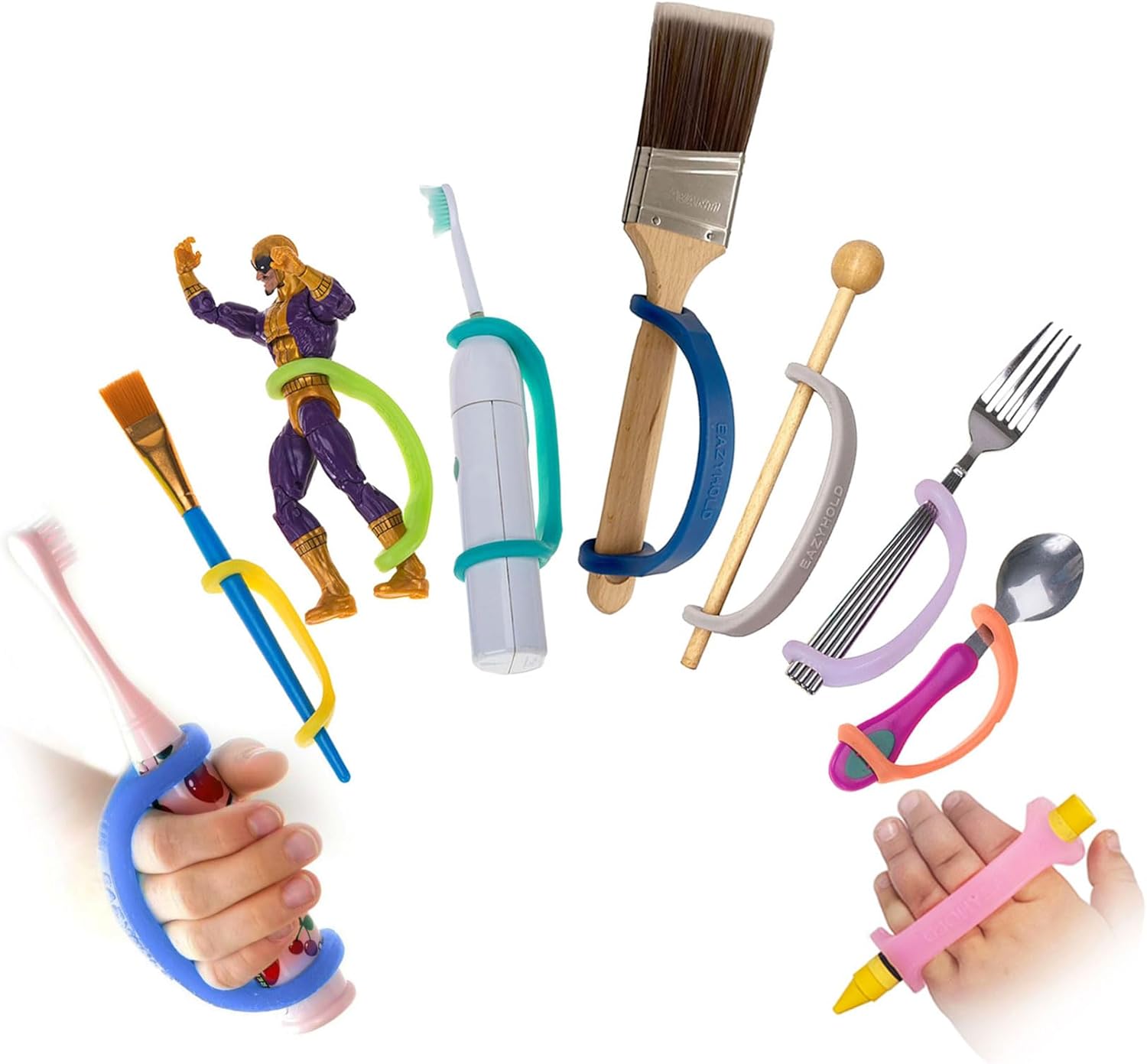
EaZyHold Silicone Universal Cuff, Adaptive Aid for Weak Grip
EaZyHold
A silicone cuff that creates a broad, stable grip for utensils, cups and small tools—made for hands that struggle with narrow pinch grips.

EaZyHold Baby Green Self-Feeding Pack - Sippy Cup Pack
EaZyHold
A sippy cup pack designed for self‑feeding and drinking practice, with grips and components tailored to early cup transition.

EaZyHold Adaptive Handle for Sports, Tools, Cups and More
EaZyHold
A versatile handle adapter that adds a larger, non‑slip grip to cups, utensils and other everyday items to make them easier to hold.
Buying Notes
Look for wider or cuffed grips that reduce pinch strength, non‑slip materials (silicone is common), and ergonomic scoops or offset bowls that make scooping easier. Consider how the aid attaches to your child’s usual cups or utensils, whether it’s adjustable or universal, and how easy it is to clean. Prioritize tools that match your child’s current abilities—cuffs and larger handles for weak grasp, simple spoons for early spooning practice. If you work with a therapist, bring options to a session to check fit and technique.
Chipi Baby Spoon – Smarter Baby Steps, First Stage Pre-Spoon Self-Feeding Training: pros and cons
Pros
- Designed for early self‑feeding practice
- Ergonomic scoop and compact profile
- Simple, single‑purpose tool caregivers can introduce at mealtime
Cons
- Single‑use training focus—limited beyond early spooning stage
- May not suit older toddlers needing larger handles
A first‑stage pre‑spoon tool designed to help babies begin spooning and independent feeding with an ergonomic scoop and easy‑grip handle.
Chipi Baby Spoon – Smarter Baby Steps, First Stage Pre-Spoon Self-Feeding Training: score breakdown
EaZyHold Silicone Universal Cuff, Adaptive Aid for Weak Grip: pros and cons
Pros
- Wide, stable hand surface reduces need for precise pinch
- Soft, flexible silicone is comfortable and washable
- Versatile—used with cups, utensils and small tools
Cons
- Higher price than single‑item aids
- May need trialing to find the best fit/placement
A silicone cuff that creates a broad, stable grip for utensils, cups and small tools—made for hands that struggle with narrow pinch grips.
EaZyHold Silicone Universal Cuff, Adaptive Aid for Weak Grip: score breakdown
EaZyHold Baby Green Self-Feeding Pack - Sippy Cup Pack: pros and cons
Pros
- Affordable kit focused on cup transition
- Designed to support independent drinking
- Compact pack that’s easy to introduce at home
Cons
- Primarily focused on cups—less useful for spooning
- May not fit every cup style without adapters
A sippy cup pack designed for self‑feeding and drinking practice, with grips and components tailored to early cup transition.
EaZyHold Baby Green Self-Feeding Pack - Sippy Cup Pack: score breakdown
EaZyHold Adaptive Handle for Sports, Tools, Cups and More: pros and cons
Pros
- Versatile—fits many types of items
- Creates a larger, non‑slip handle for easier grasp
- Useful beyond feeding (tools, sports gear)
Cons
- May add bulk or change balance of the item
- Not guaranteed to fit all shapes without checking
A versatile handle adapter that adds a larger, non‑slip grip to cups, utensils and other everyday items to make them easier to hold.
EaZyHold Adaptive Handle for Sports, Tools, Cups and More: score breakdown
Frequently Asked Questions
How do I decide between a cuff and a larger handle?
Choose a cuff if your child has a weak or inconsistent pinch—cuffs stabilize the item in the hand. Pick a larger or adaptive handle if your child benefits from a bigger target to grasp while learning control.
What age are these tools appropriate for?
Most tools here target early spooning and cup transition—typically from first attempts at self‑feeding through toddlerhood. Match the tool to current skills, not just age.
Are these items easy to clean?
Many adaptive aids use silicone or simple plastic parts that wipe clean. Check packaging for dishwasher guidance; for cuffs and silicone parts, handwashing and air drying are often recommended.
Will an adaptive handle fit my child’s cup or utensil?
Adapters and universal cuffs fit a wide range of shapes but not every item. Measure the diameter and try the adapter on the cup before regular use when possible.
Can I use these with my child’s therapist?
Yes. Bring tools to sessions so the therapist can recommend placement, grip strategies and practice progressions.
Do these products require special maintenance?
No special maintenance—regular washing, inspection for wear, and ensuring a secure fit before use are the main steps.