What You Need To Know
Light color matters for nighttime caregiving. Short‑wavelength (blue) light suppresses melatonin more than long‑wavelength (amber/orange) light. For night feeds, prefer amber or certified low‑blue bulbs that provide enough visibility without a bright white/blue cast. Below are five validated options—plug‑ins, bulbs, and a ceiling fixture—ranked for practical nursery use.
LowBlueLights Amber Night Light: 120V Plug-in LED
LowBlueLights Amber Night Light: 120V Plug-in LED stood out for bedside plug‑in for quick night feeds and bathroom trips and balanced scoring across the most useful buying criteria.
View Deal On Amazon
Nightlight comparison: amber versus warm white LEDs for melatonin-friendly sleep
Amber (~1800K or lower) gives an orange/amber glow with minimal blue light—best for protecting melatonin cues but lower color accuracy for tasks. Low‑blue or warm‑white sleep bulbs sacrifice some amber purity to improve readability while still reducing blue content versus standard LEDs. For short night feeds and diaper changes, amber plug‑ins or A15 bulbs are convenient; for overall room control choose 1800K A19 bulbs or a ceiling fixture with a night mode.
LowBlueLights Amber Night Light: 120V Plug-in LED
LowBlueLights
Low‑profile plug‑in amber LED designed to emit an amber/orange glow that minimizes blue light for quick night feeds and diaper changes.
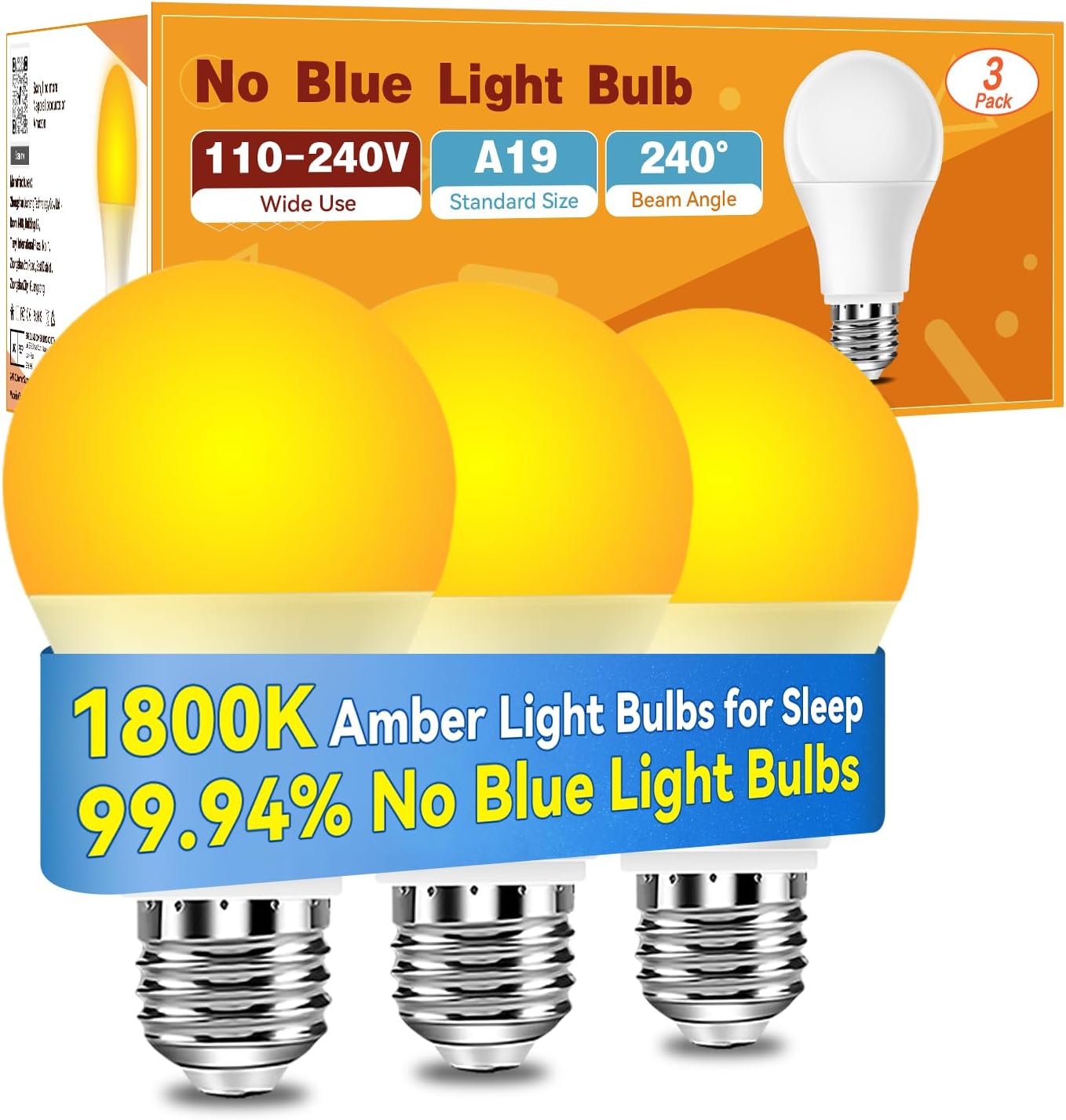
Neporal Amber Sleep Light Bulbs 1800K 3PK, 9W 60 Watt Equivalent
Neporal
Three A19 bulbs rated at 1800K—a true amber color temperature—sold as a pack for swapping into lamps and fixtures to reduce blue light at night.

KINUR A15 3W Amber Light Bulbs, Warm Orange Night
KINUR
Small A15 amber bulbs with low wattage—designed for night lamps, bedside fixtures, and nightlight housings where a compact bulb is needed.

Norb NorbSLEEP Low-Blue Sleep Light Bulb – Melatonin-Friendly
Norb
Standard A19 bulb engineered to reduce blue wavelengths while offering a more natural white appearance than pure amber—aimed at users who want readability with lower blue content.

Hlite 7.5 Inch Flush Mount LED Ceiling Light with Night Mode (3 Color Temperature Selectable)
Hlite
Affordable flush‑mount ceiling light with three selectable color temperatures and a dedicated night mode—offers whole‑room control if you prefer a ceiling option with lower evening output.
Buying Notes
- Aim for 1800K or lower (amber) or bulbs marketed as low‑blue/‘sleep’ bulbs. - Choose fixture type by task: plug‑ins or A15 bulbs for bedside lamps and quick access; A19 1800K bulbs for replacing room fixtures; a ceiling fixture with a night mode for dim ambient light. - Check dimmer compatibility before assuming a bulb will dim. - Keep lumen output low: 15–200 lm is usually adequate for feeds. - Position lights out of baby’s direct line of sight and angle toward the floor to reduce glare.
LowBlueLights Amber Night Light: 120V Plug-in LED: pros and cons
Pros
- True amber hue with minimal blue content
- Plug‑in—no separate bulb to buy
- Low power draw and unobtrusive design
- Instant, consistent color each use
Cons
- Fixed brightness (not dimmable)
- Occupies a wall outlet slot
Low‑profile plug‑in amber LED designed to emit an amber/orange glow that minimizes blue light for quick night feeds and diaper changes.
LowBlueLights Amber Night Light: 120V Plug-in LED: score breakdown
Neporal Amber Sleep Light Bulbs 1800K 3PK, 9W 60 Watt Equivalent: pros and cons
Pros
- 1800K amber color temperature reduces blue light
- Three bulbs in the box—good value for multiple fixtures
- A19 form factor fits standard sockets
Cons
- May not be compatible with all dimmers—check specs
- Lower color rendering for detailed tasks
Three A19 bulbs rated at 1800K—a true amber color temperature—sold as a pack for swapping into lamps and fixtures to reduce blue light at night.
Neporal Amber Sleep Light Bulbs 1800K 3PK, 9W 60 Watt Equivalent: score breakdown
KINUR A15 3W Amber Light Bulbs, Warm Orange Night: pros and cons
Pros
- Compact A15 size fits many nightlight fixtures
- Low wattage and warm orange color suitable for minimal wakefulness
- Affordable single‑bulb option
Cons
- Lower lumen output may not be bright enough for longer tasks or reading
- Small form factor not ideal for ceiling fixtures
Small A15 amber bulbs with low wattage—designed for night lamps, bedside fixtures, and nightlight housings where a compact bulb is needed.
KINUR A15 3W Amber Light Bulbs, Warm Orange Night: score breakdown
Norb NorbSLEEP Low-Blue Sleep Light Bulb – Melatonin-Friendly: pros and cons
Pros
- Looks like a normal bulb while cutting blue wavelengths
- Good balance of task visibility and sleep‑friendliness
- Straightforward A19 replacement
Cons
- Not as amber‑protective as 1800K bulbs
- Some blue remains compared with pure amber options
Standard A19 bulb engineered to reduce blue wavelengths while offering a more natural white appearance than pure amber—aimed at users who want readability with lower blue content.
Norb NorbSLEEP Low-Blue Sleep Light Bulb – Melatonin-Friendly: score breakdown
Hlite 7.5 Inch Flush Mount LED Ceiling Light with Night Mode (3 Color Temperature Selectable): pros and cons
Pros
- Selectable color temperatures and night mode for flexible control
- Covers whole room lighting needs
- Budget‑friendly fixture
Cons
- Selectable temps may include higher K settings—use the warmest/night mode for sleep‑friendliness
- Ceiling placement can be brighter than bedside amber bulbs
Affordable flush‑mount ceiling light with three selectable color temperatures and a dedicated night mode—offers whole‑room control if you prefer a ceiling option with lower evening output.
Hlite 7.5 Inch Flush Mount LED Ceiling Light with Night Mode (3 Color Temperature Selectable): score breakdown
Frequently Asked Questions
Is amber always better than warm white for babies?
Amber minimizes blue light best, but warm‑white low‑blue bulbs can be a practical compromise if you need better visibility for tasks.
What color temperature should I buy?
Aim for ~1800K (amber) or bulbs labeled ‘low‑blue’/‘sleep’ for nighttime use.
Can I nurse using a warm white nightlight?
Use warm‑white only if it’s explicitly low‑blue or dimmable to a very low setting—otherwise prefer amber.
Do these bulbs work with dimmer switches?
Not all are dimmable—check packaging and your dimmer compatibility before installing.
Where should I place a nightlight for feeds?
Near the changing/feeding area and angled away from the baby’s face to avoid direct glare.
Will an amber bulb affect daytime sleep?
No—amber is intended to limit evening/nighttime blue light exposure; normal daytime light should remain bright and full‑spectrum.