What You Need To Know
Many parents worry that cloud‑connected baby cameras send video into third‑party servers. Local RF-style monitor kits give you a closed, on‑site monitoring path that avoids cloud storage and account access. They trade off remote viewing and some advanced features for fewer attack surfaces. Below we compare two HelloBaby local monitor kits and a professional RGBlink video switcher as a high-control option, focusing on privacy, reliability and ease-of-use.
HelloBaby 5.5" 720P HD Baby Monitor with 4 Cameras
HelloBaby 5.5" 720P HD Baby Monitor with 4 Cameras stood out for parents who want multi‑room local monitoring without cloud storage or app accounts. and balanced scoring across the most useful buying criteria.
View Deal On Amazon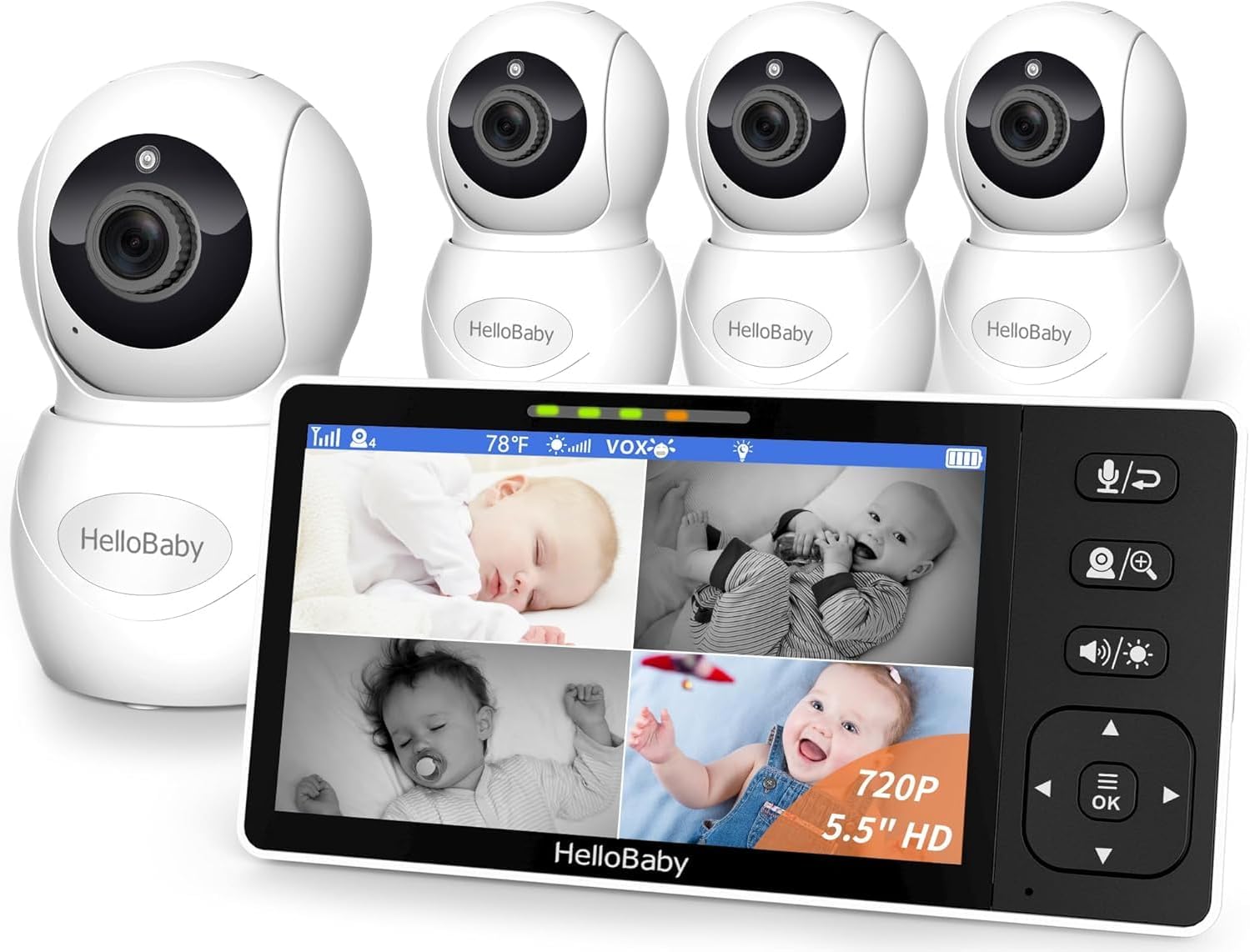
Baby monitor privacy comparison: local RF monitors versus cloud Wi‑Fi cameras
HelloBaby kits: straightforward, closed-system monitoring that minimizes cloud risk and is easy to set up; the 4-camera kit is better for multi-room households, the 2-camera kit is a budget-friendly local option. RGBlink mini-ISO: a pro tool that can keep everything local and under your control but requires technical setup and additional cameras/components, making it impractical for most parents.
HelloBaby 5.5" 720P HD Baby Monitor with 4 Cameras
HelloBaby
A 4‑camera local monitor kit with a dedicated parent display — designed to keep video on‑site without cloud accounts, aimed at families who need multi-room coverage.

HelloBaby 6” Video Baby Monitor with 2 Cameras
HelloBaby
A budget-friendly 2‑camera local monitor kit with a parent display for straightforward, offline monitoring that avoids cloud accounts.

RGBlink mini-ISO Video Switcher for Live Streaming, 10- ...
RGBlink
A professional compact video switcher designed for live production. Not a consumer baby monitor, but can be used in a local, non‑cloud monitoring setup if you provide cameras and recording/viewing hardware.
Buying Notes
If keeping footage off the internet and avoiding accounts is your priority, choose a true local monitor kit (parent unit + camera). For remote viewing you’ll need Wi‑Fi cameras or a DIY streaming setup — expect added privacy steps (strong passwords, firmware updates, VPNs). If you want absolute local control and have technical skills, a hardware video switcher gives the most flexibility but is costly and complex.
HelloBaby 5.5" 720P HD Baby Monitor with 4 Cameras: pros and cons
Pros
- Closed, on‑site system reduces cloud exposure
- Multiple cameras included for monitoring several rooms
- Dedicated parent unit — no phone app required
Cons
- Higher price than basic 2‑camera kits
- Limited or no secure remote viewing options without extra setup
- Feature set is typically simpler than Wi‑Fi camera ecosystems
A 4‑camera local monitor kit with a dedicated parent display — designed to keep video on‑site without cloud accounts, aimed at families who need multi-room coverage.
HelloBaby 5.5" 720P HD Baby Monitor with 4 Cameras: score breakdown
HelloBaby 6” Video Baby Monitor with 2 Cameras: pros and cons
Pros
- Low cost for a closed, non-cloud setup
- Simple plug-and-play parent monitor
- Fewer online attack surfaces than Wi‑Fi cameras
Cons
- Limited to local viewing unless you set up additional remote solutions
- Fewer cameras included — may require buying extras for more rooms
- Feature set is basic compared with app-based cameras
A budget-friendly 2‑camera local monitor kit with a parent display for straightforward, offline monitoring that avoids cloud accounts.
HelloBaby 6” Video Baby Monitor with 2 Cameras: score breakdown
RGBlink mini-ISO Video Switcher for Live Streaming, 10- ...: pros and cons
Pros
- Complete local control over video routing and recording when used offline
- High reliability and professional features for multi-source setups
- No mandatory cloud service — privacy depends on how you configure downstream components
Cons
- Expensive and not plug‑and‑play for typical baby monitoring
- Requires technical skills and extra equipment (cameras, encoders, monitors)
- Not designed as a consumer baby monitor — no parent-unit simplicity
A professional compact video switcher designed for live production. Not a consumer baby monitor, but can be used in a local, non‑cloud monitoring setup if you provide cameras and recording/viewing hardware.
RGBlink mini-ISO Video Switcher for Live Streaming, 10- ...: score breakdown
Frequently Asked Questions
Are local RF monitors more private than Wi‑Fi cameras?
Generally yes — local units that pair directly to a parent monitor avoid cloud accounts and online storage, reducing remote attack surfaces.
Can local RF monitors still be intercepted?
RF systems are harder to access remotely but could be intercepted with proximity and specialized gear; pick reputable kits and keep cameras location-conscious.
How can I get remote viewing without using a cloud service?
Options include VPN-ing into your home network, using local NVRs that offer secure remote access, or setting up a local streaming workflow — all require more technical setup.
Do pro tools like RGBlink expose me to cloud risks?
Not inherently. RGBlink itself is a local hardware switcher; cloud risk comes from how you stream or record the video (e.g., streaming to a service introduces cloud exposure).
What's the simplest step to improve monitor privacy?
Use devices that don't require accounts, keep firmware updated, change default passwords, and isolate cameras on a guest network if they use Wi‑Fi.